
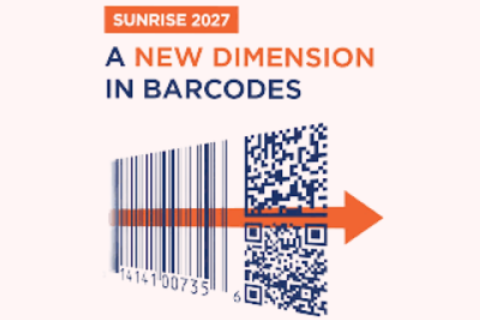
Europe’s transition towards next-generation product identification under the GS1 Sunrise 2027 initiative has entered a more tangible phase, with recent activity signalling a shift from pilot to practice. The initiative itself is not a mandate to replace traditional barcodes, but a coordinated commitment that, by the end of 2027, retail point-of-sale systems will be capable of scanning two-dimensional codes like QR codes.
What has changed in recent months is the level of operational commitment. Rather than isolated trials, retailers are beginning to embed QR codes into live assortments. Tesco’s decision last month to replace 1D barcodes with 2D QR codes across the entire own label product range marks a notable change. This move builds on two years of pilots and demonstrates that the technical and process challenges, ranging from scanning reliability to data integration, are now sufficiently resolved for real-world deployment.
QR codes structured to GS1 standards can encode batch, date and serialised information, enabling far greater precision in inventory management and recalls. Retailers can isolate affected batches rather than entire product lines, while dynamic data opens the door to improved stock rotation and waste reduction. In addition, the new codes offer consumers, through a smartphone scan, access to extra data like ingredients, allergens, and traceability.
The industry consensus continues to favour a dual-marking period, where 1D and 2D codes coexist to ensure interoperability during the transition.
Tesco’s move therefore acts as a practical benchmark rather than an outlier. It indicates that Sunrise 2027 is no longer a distant systems deadline but an active transformation underway, with early adopters beginning to define how quickly the rest of the European market will follow.